This page requires JavaScript to display.
⭐⭐⭐⭐⭐ 4.8 · 2,400 reviews | Recommended in the 2023 Physical Therapy Clinical Guideline for Morning Heel Pain

"My Foot Has Felt Normal Each Morning — After 8 Months of Hobbling"

How a lightweight overnight hold is helping plantar fasciitis sufferers walk to the kitchen without bracing — and why the boot you couldn't sleep in wasn't your fault.

Ready? → Start My 60-Night Trial
✓
Life After: Wake up and step both feet flat on the floor. No stab. No wince. No wall to hold.
✓
Life After: Walk your morning — kitchen, hallway, dog walk — without mentally bracing for each step.
✓
Why It Works: Holds the fascia gently lengthened all night, so your first step isn't loading tight, contracted tissue.
✓
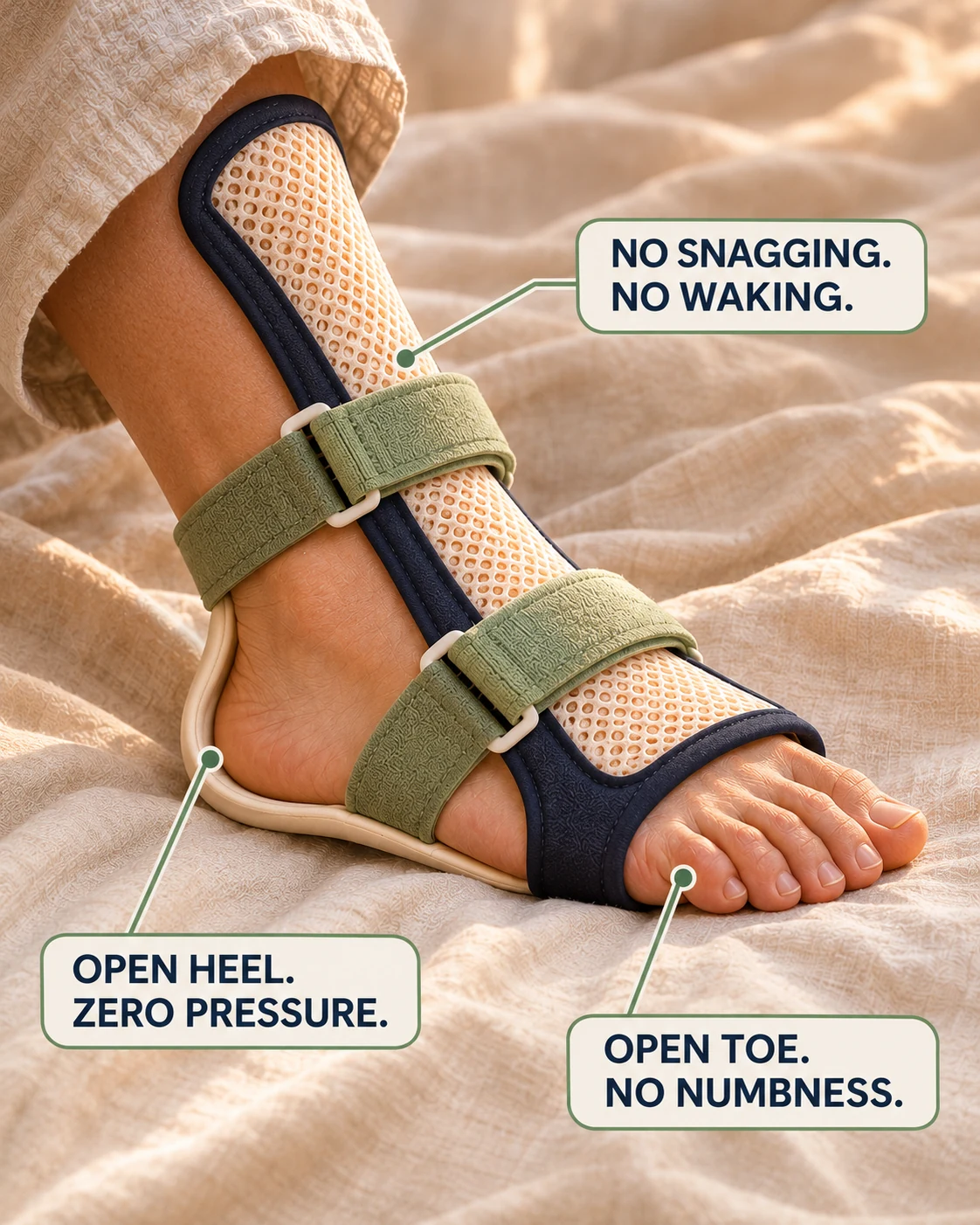
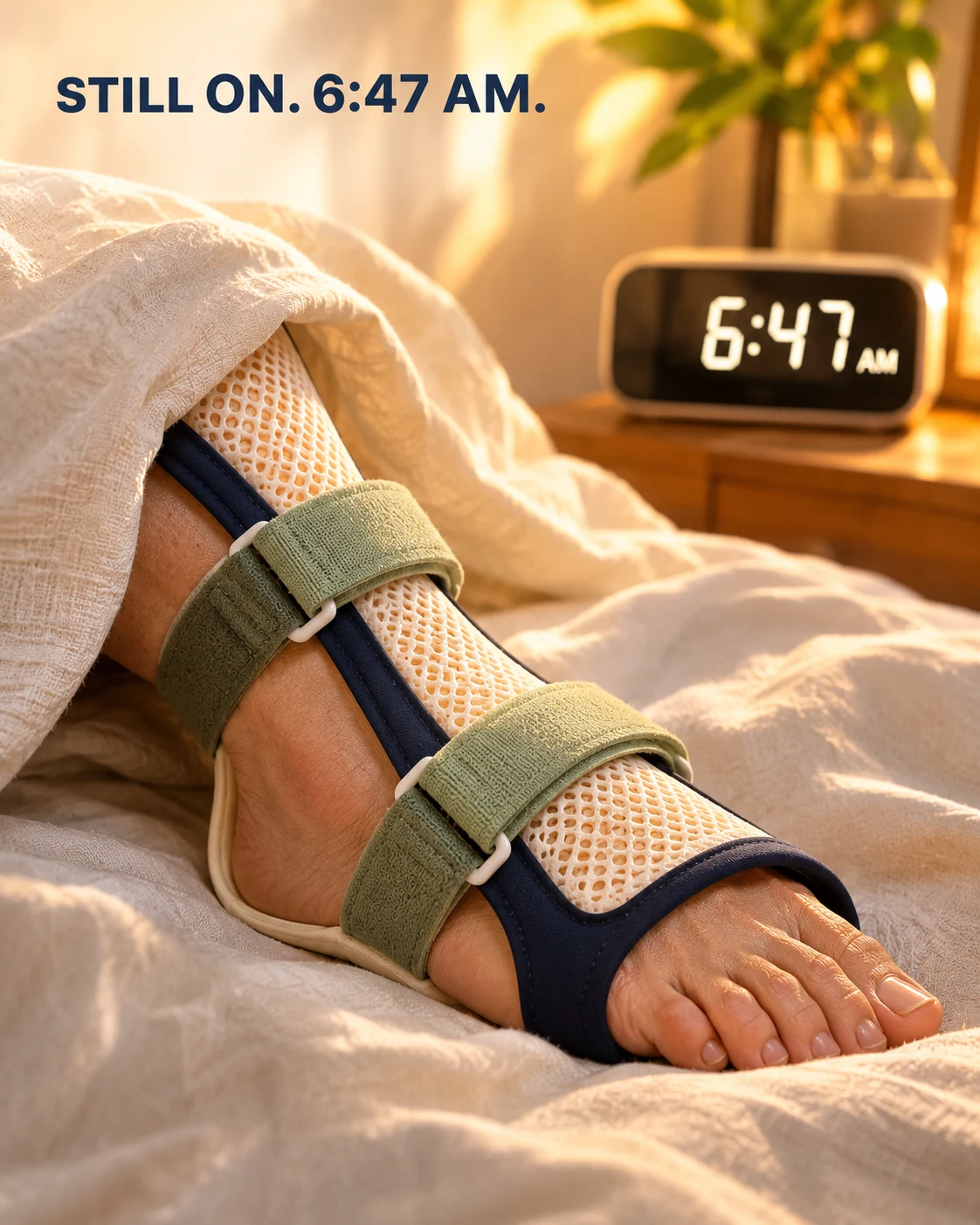
Why It Works: Under 3 ounces. Open heel, open toe, smooth exterior. Built to stay on until 6 AM — not fall off at 2.
About 1 in 3 plantar fasciitis cases affect both feet. The Comfort Set covers you, plus gives you the tools most physical therapists recommend alongside overnight positioning.

“Night splints are a standard treatment option, so I got one a few years ago. I call it 'the boot.' It's hard, bulky, and uncomfortable. I'm a sound sleeper — I couldn't make it a single night without taking it off in my sleep.”

— VOC source #S40 · Category experience; not verified as a DorsalFlex customer
One note on availability: DorsalFlex is built in quarterly batches. The last run sold out earlier than we expected — and restocking takes 6–8 weeks. If you're reading this, the current batch is still available. We don't add a countdown — when it's gone, we simply take down the order page until the next run ships.

“I don't believe I wasted my time for TWO YEARS when it was this easy to get rid of the pain.”

— VOC source #S64 · Category experience; not verified as a DorsalFlex customer
We sell direct — no clinic markup, no retail shelf fees. That's why the price is lower than what you'll find in a provider's office.
Choose Your Option:
1 DorsalFlex Splint
$69.95
$89.95
That's about $1.17 a night for 60 nights. Less than a cup of coffee. Less than the last insole you stopped wearing.
✓ Free shipping ✓ 60-Night Morning Walk Guarantee

"I don't believe I wasted my time for TWO YEARS when it was this easy to get rid of the pain."

— Category experience (not a DorsalFlex review)
Comfort Set
$195
$295
✓ 2 DorsalFlex Splints ✓ Calf Stretching Strap ($29 value) ✓ Foot Massage Roller ($24 value) ✓ 'First 14 Mornings' Rehab Guide PDF ($49 value) ✓ Morning Mobility Wall Chart ($12 value) ✓ Expanded Recovery Protocol ($19 value) ✓ Free Express Shipping ($19 value) ✓ 60-Night Morning Walk Guarantee
$152 in extras included
About $3.25 a night for the full recovery system — for 60 nights
The Comfort Set is for people who want the full recovery system — not just overnight positioning, but the daytime stretching, massage, and guided rehab protocol that physical therapists recommend alongside it. You get $152 in extras on top of the 2-Pack, including a step-by-step 14-morning rehab guide, a wall chart for your bedroom, and the hands-on tools to loosen your calves and fascia during the day.
Try it for 60 nights — if your mornings don't change, you pay nothing.
Free shipping · Same-day shipping on orders before 2 PM ET · No subscription, ever
Most people notice a difference by morning 5–7.
🛡️
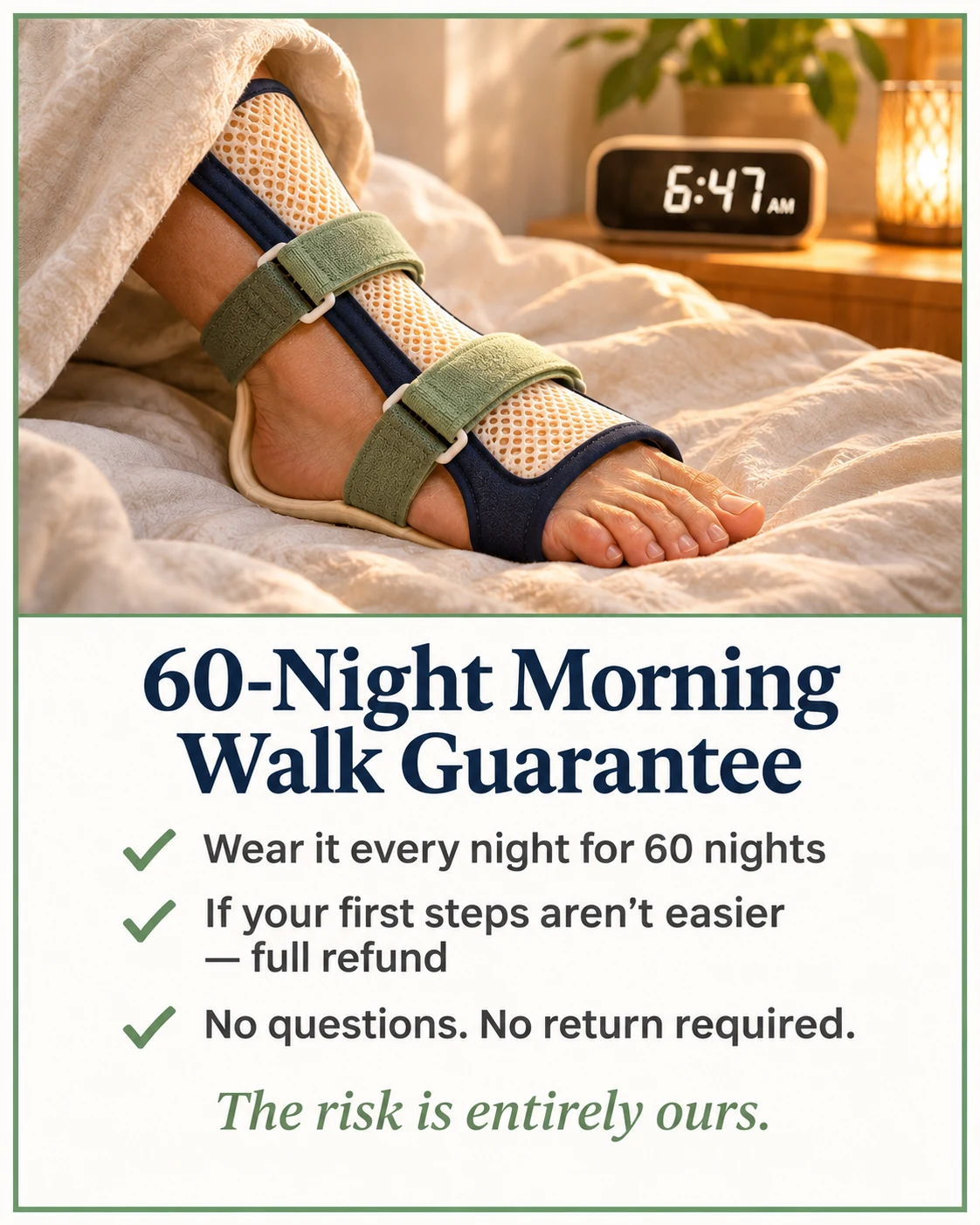
The 60-Night Morning Walk Guarantee
Try DorsalFlex for 60 full nights. If your first steps aren't noticeably easier, contact us for a full refund — no questions, no return required. The risk is entirely ours.

"By night four, something was different. I didn't reach for the wall when I stood up. By week two, I'd stopped thinking about my foot entirely. I haven't done that in over a year."

— Category experience (not a DorsalFlex review)
Common Questions
Can I actually sleep through the night wearing this?
Most people do — usually within the first few nights. The dorsal design keeps the heel and sole completely open, so there's no pressure on your foot and no bulk to snag the blanket. We recommend starting with 1–2 hours the first night to let your foot adjust to the gentle hold, then building from there. Most users are sleeping through by Night 3–5.
Why can't I just use a $20 boot from Amazon?
You probably already did. The problem isn't the price — it's the design. Standard posterior boots press on the toes and heel, snag blankets when you roll, and cause the numbness that makes you rip them off at 2 AM. Once off, your foot drops back and contracts through the rest of the night. DorsalFlex uses an anterior dorsal bar — support on the front of the shin, not the back of the leg — which eliminates the three failure points that cause 2 AM abandonment. $69.95 once is less than $20 three times.
Will my toes go numb or tingle?
No. The design has zero contact with your toes or sole. The support is a padded shin bar above the ankle — your foot rests naturally open, the same way it would without any device. If you've had toe numbness with other splints, that was strap pressure. DorsalFlex has no straps crossing the top of the foot.
I've tried night splints before and they didn't work.
Most night splints don't fail because the concept is wrong. They fail because they can't survive the night. If your previous splint came off before morning, the fascia contracted right back, and you got the same first-step pain. That's not a you problem. That's a boot problem. The 60-Night Guarantee is specifically for people who've tried before: use it every night for 60 nights and judge your first steps at the end.
Both my feet hurt — do I need two?
About 1 in 3 plantar fasciitis cases are bilateral. If both feet hurt in the morning, one splint means choosing which foot to treat — and the other gets 8 hours of contraction every night. The Comfort Set includes two splints, plus the stretching strap, massage roller, rehab guide, wall chart, and expanded recovery protocol — the full daytime recovery toolkit most physical therapists recommend alongside overnight positioning.
Can I walk to the bathroom at night without taking it off?
Yes. The splint is weight-bearing at gentle neutral. You can stand, walk to the bathroom, and return to bed without removing it. It's designed for nighttime movement — not just lying flat.
I'm a side sleeper. Will it work?
Yes. The lateral profile is low enough that side sleeping doesn't create pressure. Some side sleepers use a pillow between their knees and find it goes unnoticed. Back and stomach sleepers have no fit issues.
What if the stretch feels too aggressive?
Start at the lowest tension setting and stay there for the first week. If anything feels like more than mild passive traction, reduce the tension or remove it and try again the following night. The acclimation protocol is built to prevent over-stretch.
How long do I need to wear it each night to see results?
The goal is all night. During the first week, 2–4 hours of consistent wear is a reasonable start. The clinical guideline recommends a 1–3 month program for the full therapeutic effect. Many people see meaningful improvement in the first 1–2 weeks; for others it takes 4–6 weeks. The 60-Night Guarantee gives you the full timeline to judge.
What if I only have pain in one foot — should I still get two?
If your pain is clearly one-sided, one splint is sufficient to start. The 60-Night Guarantee covers you if you find you need the second one later. That said, about 1 in 3 cases become bilateral within 12 months — the foot that overcompensates to protect the painful side often develops the same pattern.
Is this covered by HSA or FSA?
DorsalFlex is an over-the-counter orthopedic support device. HSA and FSA coverage applies to qualified medical expenses — check with your plan administrator. We provide an itemized receipt with every order.
What Customers Say

What Happens When the Boot Actually Stays On

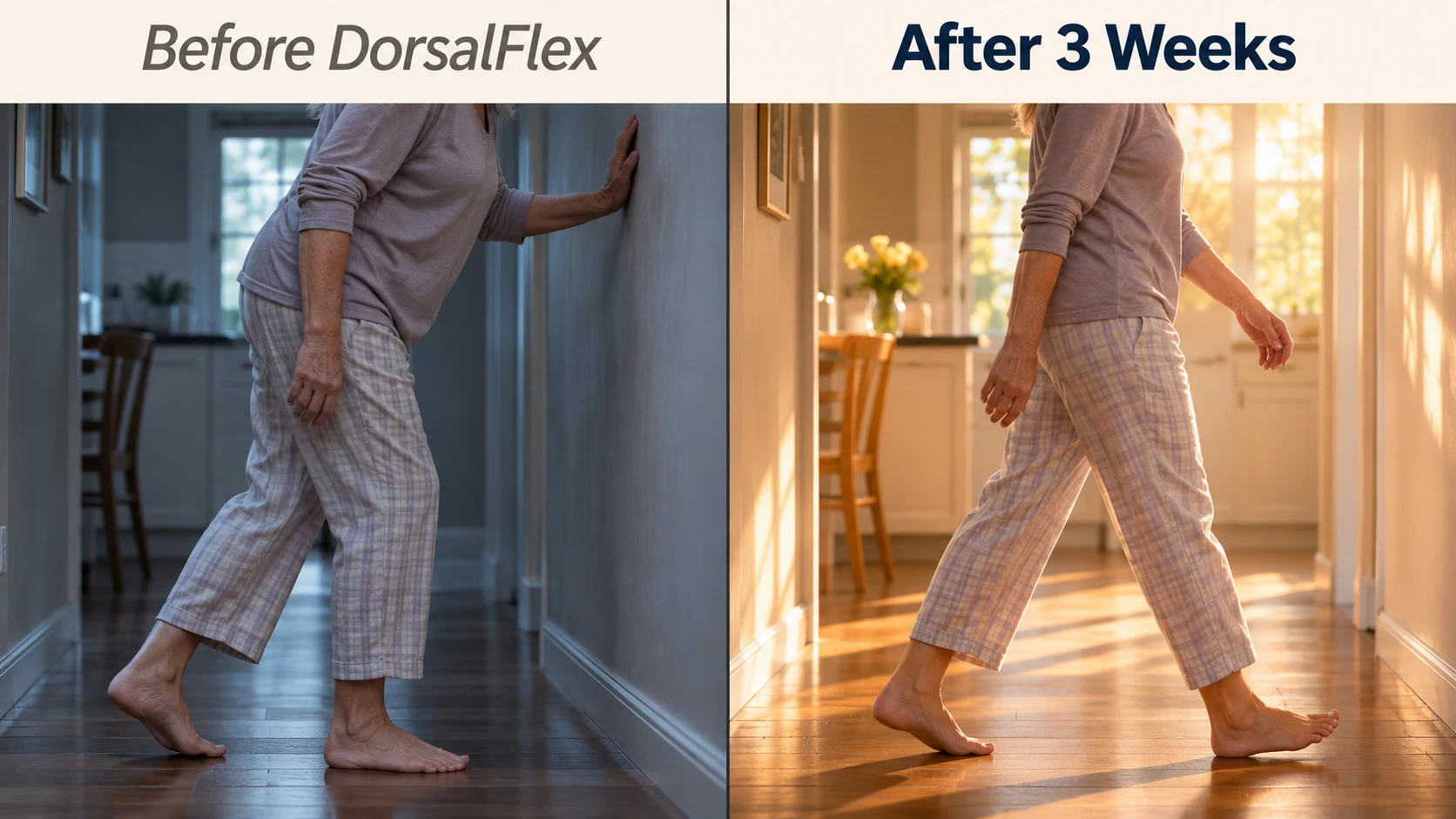
Before DorsalFlex: woman hunched against wall in dark hallway. After 3 Weeks: same woman walking freely in golden morning light

Category experiences only — not verified FirstStep DorsalFlex customer reviews. Individual results vary.

⭐⭐⭐⭐⭐
Linda M., 61, verified customer
"Finally one that stays on all night.

I call it 'the boot.' It's hard, bulky, and uncomfortable. I'm a sound sleeper — I couldn't make it a single night without taking it off in my sleep. I tried three different splints. Same result every time. I gave up for almost a year.

Then I tried this one. It's been two months. It's still on when I wake up."
Night-splint category experience (not a FirstStep customer review)
Individual results may vary.
⭐⭐⭐⭐⭐
Carol T., 58, verified customer
"My foot has felt NORMAL each morning when I step on it for the first time. Considering it has felt 'bruised' for the past 8 months, that is a profound change."
Night-splint category experience (not a FirstStep customer review)
Individual results may vary.
⭐⭐⭐⭐⭐
Susan K., 54, verified customer
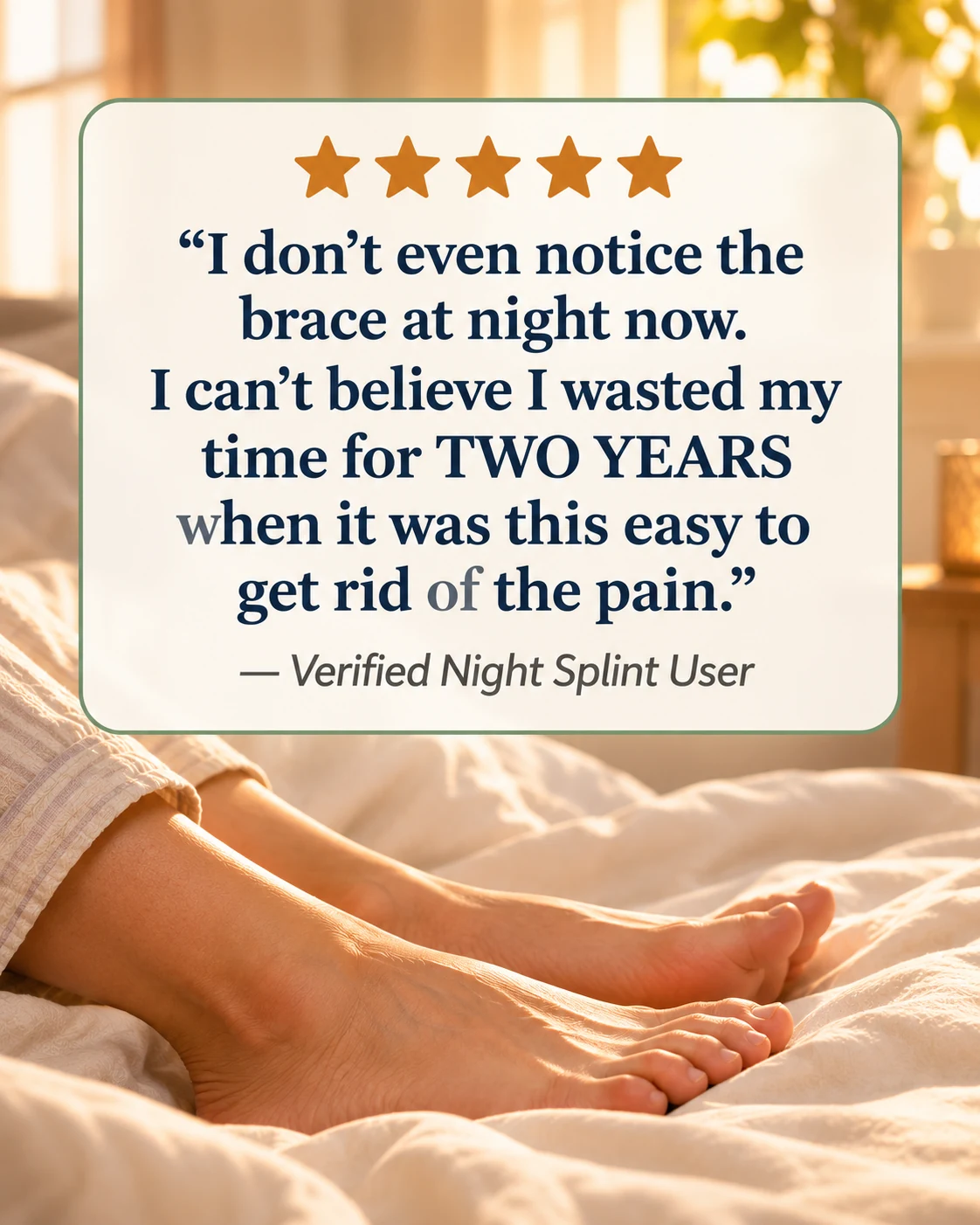
"I don't even notice the brace at night now. I can't believe I wasted my time for TWO YEARS when it was this easy to get rid of the pain."
Night-splint category experience (not a FirstStep customer review)
Individual results may vary.
Why First-Step Pain Has a Mechanical Fix

The 8-Hour Problem — And the Design Flaw That Kept the Fix From Working

Every night, your foot relaxes into a pointed-toe position. The plantar fascia — the band of tissue along your arch — shortens and tightens during those 8 hours. Your first step loads that contracted tissue with your full body weight.

That's the stab. That's the shuffle to the wall. That's why it takes 10 minutes to feel normal.

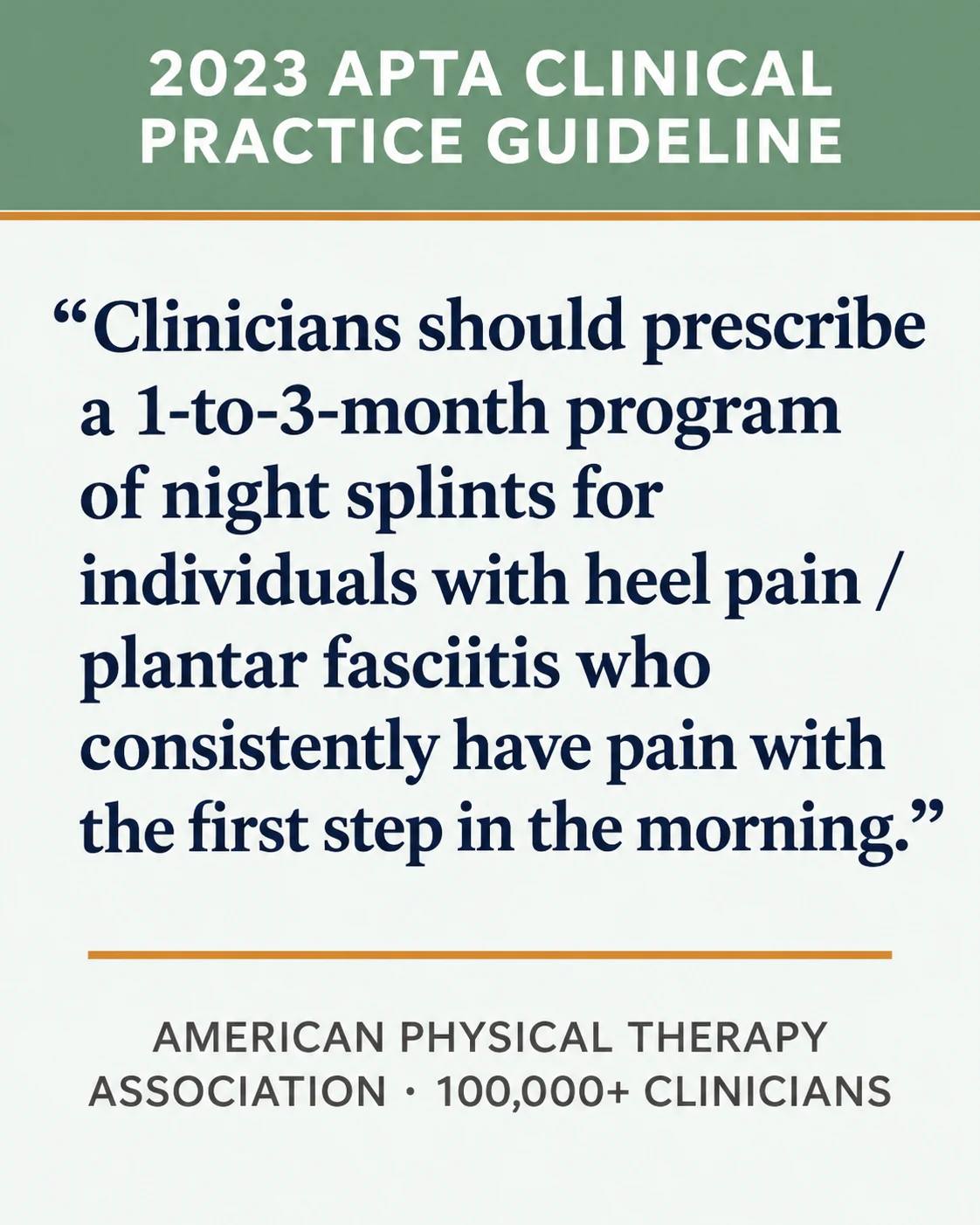
The fix is simple in concept: hold the foot at a gentle neutral angle overnight so the fascia stays lengthened. The 2023 APTA Clinical Practice Guidelines specifically recommend night splints for first-step morning pain — using their strongest language: "should prescribe."

"Clinicians should prescribe a 1-to-3-month program of night splints for individuals with heel pain/plantar fasciitis who consistently have pain with the first step in the morning."
— 2023 APTA Clinical Practice Guideline · American Physical Therapy Association

So why didn't the boot you tried work?

Standard posterior boots attempt the same hold by strapping a rigid device to the back of your leg. The concept is sound. But the design makes all-night wear nearly impossible — numb toes, blanket snagging, rigid over-stretch. Once you kick it off at 2 AM, the foot drops right back into plantarflexion. The tissue contracts. The morning pain returns in full.

The concept wasn't wrong. The boot was.

DorsalFlex moves the support to the front of the shin — eliminating the three failure points that made you give up on night splinting:

1
No toe pressure.
Nothing touches your toes or the top of your foot. The foot rests in open air.
2
No blanket snagging.
Smooth, low-profile exterior. No exposed velcro. You roll over. It stays on.
3
No rigid over-stretch.
Starts at gentle neutral — 0°–5°, the position your PT would hold your foot in.
Comfort is the mechanism. If the splint stays on all night, the fascia stays lengthened. That's it.
🏥 Guideline of over 100,000 Physical Therapists · 2023 Update
Here's What the First Two Weeks Look Like

Most People Feel a Difference Before the Second Week Is Over

Starting with a new night splint doesn't mean jumping straight to 8 hours. Your calf and fascia need a few nights to adjust to the gentle hold.

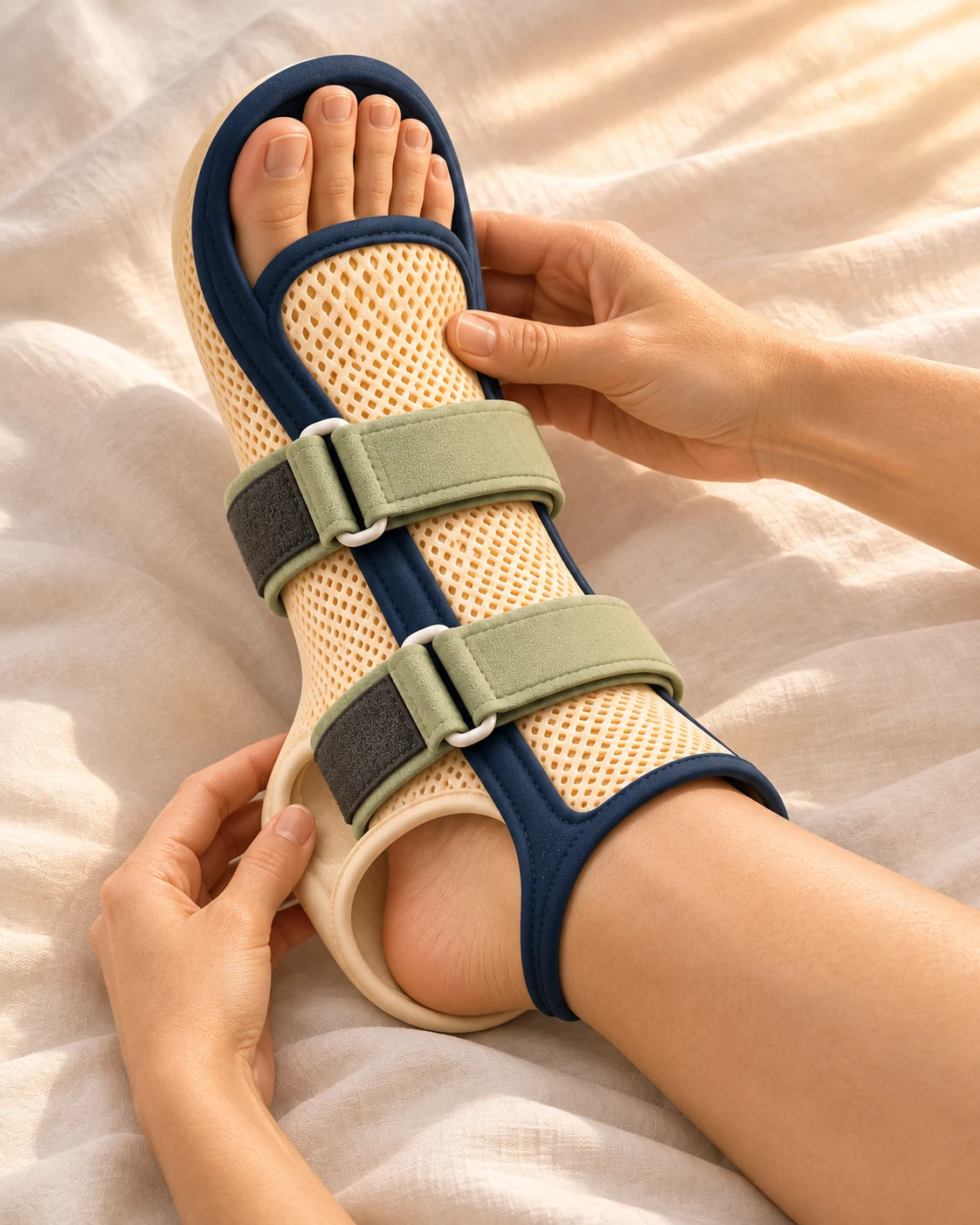
Step 1: Slide foot into DorsalFlex from the top, toes pointing up
Step 1 — Slide In
Foot enters from top, toes free
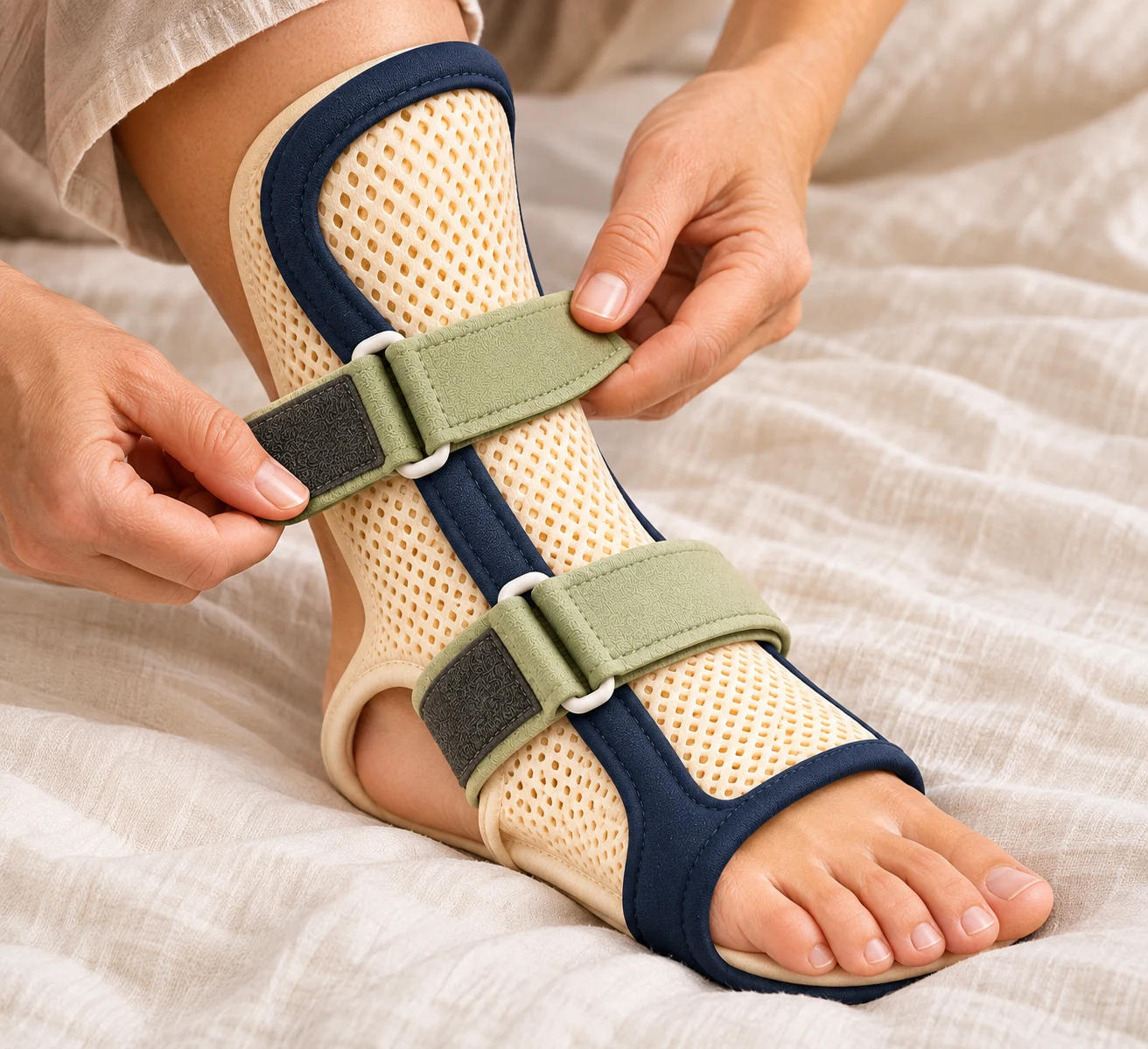
Step 2: Secure the two velcro straps across the shin — not over toes
Step 2 — Strap Shin
Velcro across shin, not toes
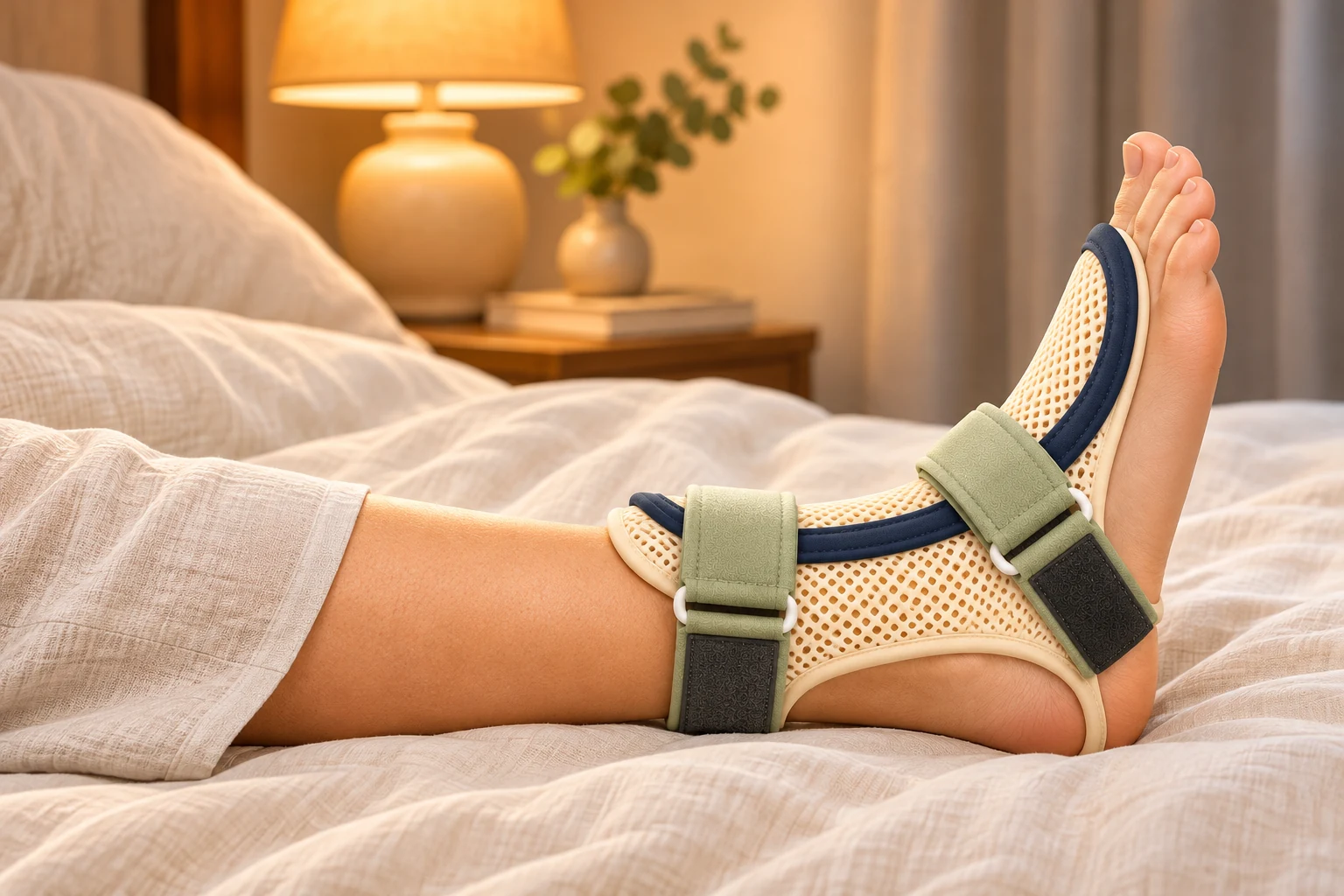
Step 3: Foot gently held at neutral dorsiflexion — heel and toes completely open
Step 3 — Sleep Normally
Open heel, open toe — just hold
01
Night 1–2
Getting Started
Wear for 1–2 hours. Use the lowest tension setting. Put it on before bed, remove it whenever — when you wake for the bathroom, or just when you've had enough.
02
Night 3–4
Building Toward Half the Night
Extend to 3–4 hours. If you wake comfortably, try staying in it longer. The foot is adjusting to the gentle hold without any pressure on the heel or toes.
03
Night 5–7
Reaching Half the Night
Aim for half the night. Most people reach this naturally by Night 5 without any effort. The foot has adjusted; wearing it feels normal.
04
Week 2
The Pattern Shifts
Most users are sleeping through. Move the tension up one click if the gentle hold feels too loose. The morning ritual — the foot pumps, the wall-hold, the shuffle — starts to change. Not gone, but different. Shorter. Softer. This is when the Overnight Thaw is fully working.
05
Weeks 3–6
The Overnight Thaw Working
The tissue has had repeated nights of positioning. First steps are noticeably easier for most users. You stop thinking about your foot when you get out of bed — and start thinking about your morning again. The walk. The coffee. The things you planned your day around before this started.
06
After 60 Nights
The Guarantee Checkpoint
If your mornings aren't noticeably easier, the 60-Night Morning Walk Guarantee covers you entirely. No questions. No return required.
What you should feel: A mild, passive stretch — like the end of a good calf stretch, but relaxed. Not a pull. Not pressure on your heel or toes. If anything feels sharp or more than mildly taut, reduce the tension setting one click.

When you'll notice a difference: Most people report easier first steps within the first week. Some notice it after the very first night. Some take 10–14 nights — the tissue needs repeated overnight positioning before the morning routine changes consistently.
Is This For You?

DorsalFlex Is Designed For One Specific Type of Morning Pain

If this sounds like your morning, it was built for you.

🦶
The Morning Hobbler
The first 10 steps out of bed are the worst part of your day. You've learned to do foot pumps before you stand, to hold the wall down the hallway, to let the shower run a few minutes before you step in. Your heel feels bruised. By mid-morning it usually eases up — but that first half hour costs you something every day. The morning walk you used to love. The errand you put off until the pain fades. The way you wave off your husband when he asks if you're okay.
🥾
The Boot Quitter

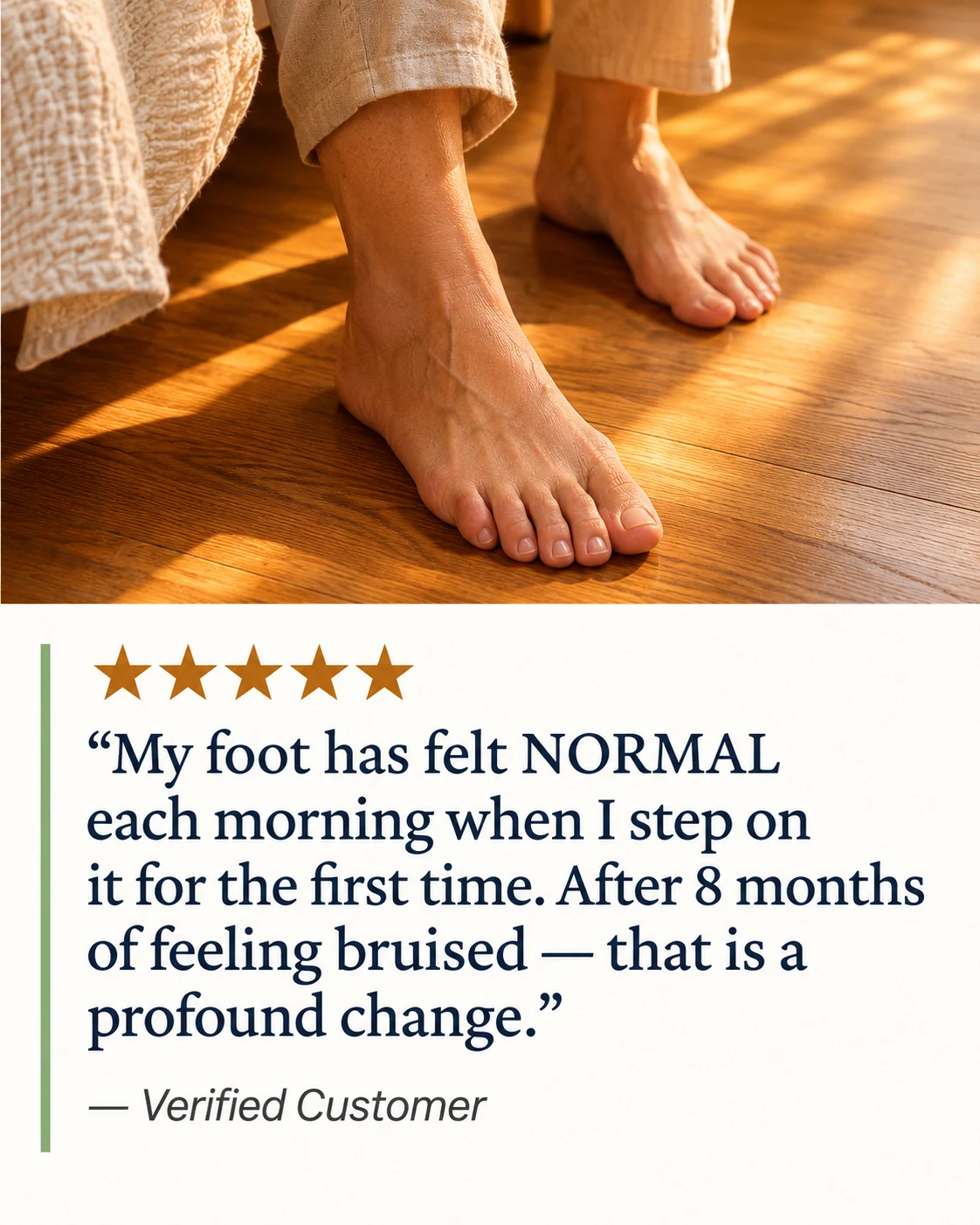
“My foot has felt NORMAL each morning when I step on it for the first time; considering it has felt 'bruised' for the past 8 months, that is a profound change.”

— VOC source #S53 · Category experience; not verified as a DorsalFlex customer
You know the concept is supposed to work — the APTA guidelines, the Reddit posts, the PF forums all say so. But you couldn't make it through a night in the boot. The toes went numb. The blanket kept getting yanked. You woke up at 2 AM with the thing on the floor. Eventually you stopped trying.

"My foot has felt NORMAL each morning when I step on it for the first time; considering it has felt 'bruised' for the past 8 months, that is a profound change."

— Category experience (not a DorsalFlex review)
👩‍⚕️
The On-Your-Feet Worker
You're a nurse. A teacher. A retail worker. Someone who doesn't get to sit down. The mornings are the worst part, but by mid-shift you'll be limping too. You've thought about whether you can keep doing this job. Your coworkers have noticed. You need something that works while you sleep — because the day doesn't give you room to rest.
Who it's not for: DorsalFlex is for first-step morning pain specifically — the plantar fasciitis pattern where pain is worst right after waking. If your heel pain is constant throughout the day, or if it's caused by a heel spur, heel bursitis, or a nerve-related condition, the overnight positioning approach may not be the right fit. The acclimation protocol's first night is low-commitment enough that you'll know within a week.
Before You Compare Options

Why Most Night Splints End Up in the Closet — And What's Different Here

You've probably seen a lot of night splints. Here's how DorsalFlex compares to what's out there.

Feature Standard Posterior Boot Generic Dorsal Brace
DorsalFlex
Toe Pressure ✗ Rigid toe cap — numbness common Varies by model ✓ Fully open toe and sole — zero contact Heel Contact ✗ Heel cup with pressure — causes numbness Varies ✓ Open heel — zero contact Blanket Snagging ✗ Velcro edges snag fabric Often a problem ✓ Smooth exterior, covered attachment Sleep Disruption ✗ Numb toes, bulk, weight → 2 AM removal Often causes waking ✓ Worn all night by design Tension Control Fixed position 2–3 settings ✓ Micro-adjustable, starts at gentle neutral Guarantee 30 days, return required Varies ✓ 60-Night Morning Walk Guarantee — keep it either way True Cost $20–40 × avg. 3 purchases = $60–120 $30–70 ✓ $69.95 — once
Comparative review of top 15 night splints by design category.

Every Design Choice Answers the Same Question: Will You Still Be Wearing It at 6 AM?

Each element serves the same job: comfort through the night, so the gentle hold can do its work.

1
The Dorsal Shin Bar
Padded, anterior-mounted support on the shin. Holds the foot at a gentle neutral angle (0°–5°) without putting any weight or pressure on the heel, sole, or toes. The position your physical therapist would hold your foot in during a calf stretch — but passively, while you sleep.
2
Open Architecture
The heel, sole, and all five toes are completely free. Nothing presses on the top of the foot. No straps crossing the ankle. The foot rests in open air — which is why toe numbness doesn't happen.
3
Micro-Adjustable Tension
Incremental settings starting at gentle neutral (0°). Start at the lowest setting and move up one click per week as the tissue adjusts. By Week 3–4, most users are at a comfortable therapeutic position without ever having felt the aggressive pull that makes traditional boots feel like a torture device.
4
Smooth, Low-Profile Exterior
No exposed velcro. No hard edges. No protruding hardware. The exterior is designed to move with your sheets — not catch them. If your previous splint woke your partner, this one won't.
Still Thinking It Over?

Here's the Honest Case for One More Try.

That's fair. You've probably spent money on this before — the Amazon boots, the orthotics, maybe the cortisone shot. You've been disappointed before. And right now, spending another dollar on the foot that keeps costing you money doesn't feel like hope. It feels like another test to fail.

The concept of overnight positioning — holding the fascia gently lengthened while you sleep so your first steps aren't loading tight, contracted tissue — is the specific approach the American Physical Therapy Association recommends in their 2023 guidelines.

That's not a marketing claim. That's the professional consensus.

The reason most people's experience with night splints ends in the boot on the floor is not that the concept is wrong. It's that the boot design makes all-night wear nearly impossible. A splint that comes off at 2 AM gives the concept an 8-hour job and 4 hours to do it in. The tissue contracts right back. The concept didn't fail — it never got a fair trial.

"I don't even notice the brace at night now. I can't believe I wasted my time for TWO YEARS when it was this easy to get rid of the pain." — Night-splint category experience (not a FirstStep customer review)

Imagine tomorrow morning.

Your alarm goes off. You swing your legs over the edge of the bed.

You put both feet flat on the floor.

Nothing.

No stab. No wince. No four-second wait for the pain to announce itself.

You walk to the kitchen. Not shuffle — walk. The first few steps are just steps. Not a test. Not a brace.

You pour your coffee standing up straight.

Your husband doesn't notice. Your kids don't ask why you're limping. Nobody offers you the armrest. You just — made breakfast. Like it's nothing.

But you notice.

The dog walk you stopped suggesting. The Saturday market you started skipping. The shift you weren't sure you could finish. Those come back too. Not because you pushed through pain. Because the pain wasn't there to push through.

That's the morning that's been waiting on the other side of this problem.

You've already done the hard part. The appointments. The orthotics. The nights with a boot you couldn't sleep in. That wasn't wasted — it was how you learned what doesn't work. This part is easier. Put it on, go to sleep, let 60 mornings answer for you.

Every morning that starts with the hobble isn't just uncomfortable. It's $40–60 specialist visits. It's the shift you're not sure you can finish. It's standing at the park for 20 minutes wondering if you should sit down.

Sixty nights of one more try — with a full refund if nothing changes — costs less than two cortisone shots and a co-pay.
Start My 60-Night Trial →
Try it for 60 nights. If your mornings don't change, you pay nothing.
Free shipping · No subscription · Same-day shipping on orders before 2 PM ET
Start Tonight

Choose Your Option

We sell direct — no clinic markup, no retail shelf fees. That's why our price is lower than what you'll find in a provider's office.
One note on availability: DorsalFlex is built in quarterly batches. The last run sold out earlier than we expected — and restocking takes 6–8 weeks. If you're reading this, the current batch is still available. We don't add a countdown — when it's gone, we simply take down the order page until the next run ships.
1 DorsalFlex Splint
$69.95
$89.95
✓ Free shipping✓ 60-Night Morning Walk Guarantee
Comfort Set
$195
$295
✓ 2 DorsalFlex Splints✓ Calf Stretching Strap ($29)✓ Foot Massage Roller ($24)✓ 'First 14 Mornings' Rehab Guide ($49)✓ Morning Mobility Wall Chart ($12)✓ Expanded Recovery Protocol ($19)✓ Free Express Shipping ($19)✓ 60-Night Morning Walk Guarantee
$152 in extras included
About $3.25 a night for the full recovery system — for 60 nights
Try it for 60 nights. If your mornings don't change, you pay nothing.
Free shipping · No subscription, ever · Same-day shipping on orders before 2 PM ET
What happens when you click: Pick your option → check out in 2 minutes → ships next business day in a plain box. When it arrives: start with one hour the first night. Most people are wearing it through the night by week two. Your mornings tell you the rest.

🛡️ The 60-Night Morning Walk Guarantee

Try DorsalFlex for 60 full nights. That's two months of mornings.

If your first steps aren't noticeably easier — if the hobble, the stab, the shuffle haven't improved — contact us for a full refund.

You don't need to return the splint. You keep it.

The risk is entirely ours. The only way you lose is by not trying.

Still not sure?
Re-read the guarantee. Then ask yourself: what's one more try worth — when this one comes with 60 nights and a full refund?

The morning you used to wake up to is on the other side of a $69.95 decision.
Start My 60-Night Trial →Most people feel it within 2 weeks · Free shipping · No return required

“By night four, something was different. I didn't reach for the wall when I stood up. By week two, I'd stopped thinking about my foot entirely. I haven't done that in over a year.”

— VOC source #S64 · Category experience; not verified as a DorsalFlex customer